

Immersive Storytelling: How Virtual Reality is Redefining the Open House Experience
The weekend routine is all too familiar for aspiring homeowners. It’s a frantic race against the clock, fueled by lukewarm coffee and a GPS juggling multiple destinations. You rush across town, circle the block looking for parking, and finally join a crowd of strangers shuffling through someone else’s life. In a brief 15-minute window, you’re supposed to absorb the layout, gauge the natural light, and somehow envision your future—all while trying to discreetly peek inside the closets.

After visiting three or four properties, the details blur into a confusing montage of granite countertops and beige walls. The photos you snapped on your phone don’t capture the true scale of the living room, and you can’t quite remember if the hallway felt spacious or cramped. The traditional open house, for all its history, is often an inefficient and emotionally detached process.
But what if you could step inside a home, explore every corner, and get a genuine feel for the space without ever leaving your couch? Technology is not just changing the game; it’s building a whole new arena. At DEAN Knows, we believe that expertise lies in leveraging these powerful tools not just for convenience, but to tell a home’s unique story. Virtual Reality (VR) is leading this charge, transforming the open house from a logistical scramble into a deeply personal and insightful experience.
Key Takeaways
- Beyond Convenience: VR open houses offer more than just a remote viewing option; they provide a true-to-life sense of a property’s scale, flow, and atmosphere, leading to more confident decision-making.
- The Power of Narrative: Immersive storytelling techniques like virtual staging, lighting simulations, and informational hotspots transform a simple property viewing into an emotional journey, helping buyers connect with a house as a potential home.
- A Win-Win for Buyers and Sellers: Buyers gain unparalleled access and flexibility, while sellers benefit from attracting more qualified leads, standing out in a competitive market, and reducing the disruption of in-person showings.
- Expertise is the Differentiator: The true value of VR technology in real estate isn’t the tool itself, but the strategic expertise behind its implementation—crafting a compelling narrative that highlights a home’s best features.
The Sunday Scramble: Why the Traditional Open House is Ready for a Revolution
The traditional open house model has served its purpose for decades, but it’s fraught with limitations for both buyers and sellers in the modern market. For buyers, the challenges are obvious: time constraints, travel costs, and the pressure of crowded viewings make it difficult to connect with a property. Photos can be masterfully angled to make small rooms look expansive, and a quick walkthrough rarely provides the information needed to make one of life’s biggest financial decisions.
For sellers, the process involves significant disruption. It means depersonalizing your home, keeping it in pristine condition for hours, and vacating for the afternoon, all for a stream of visitors who may range from serious contenders to curious neighbors. The return on this investment of time and effort can be uncertain.
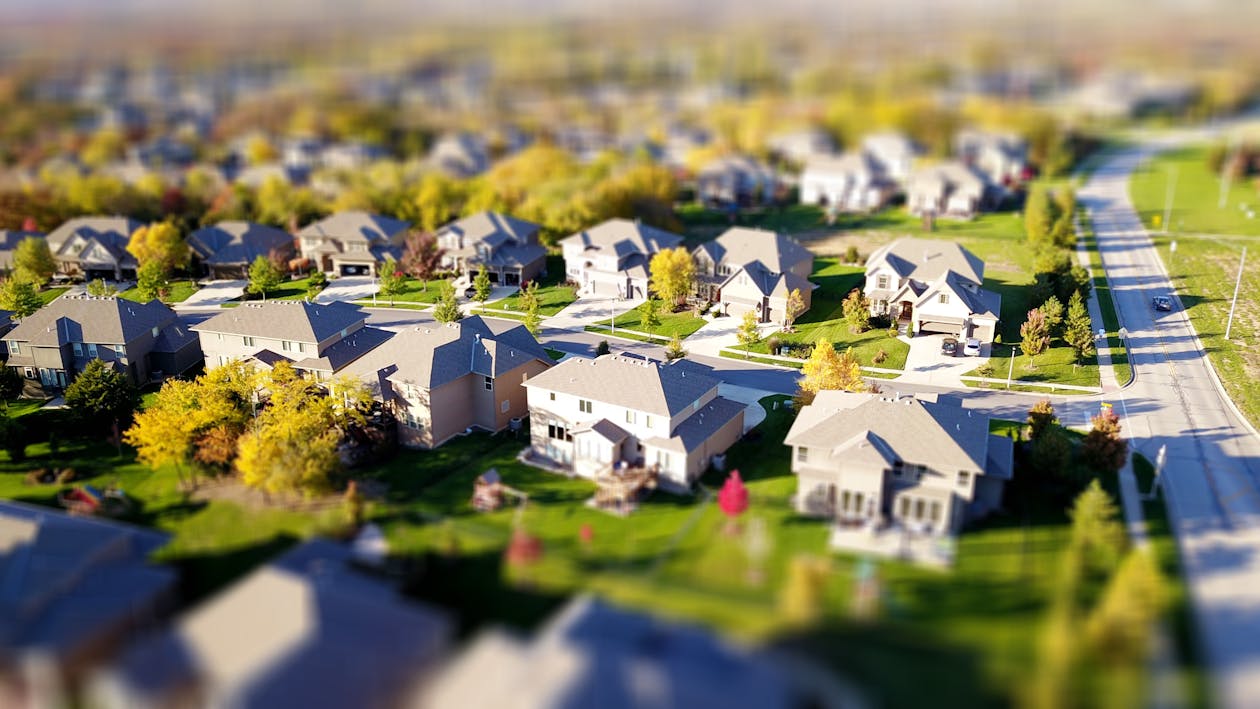
This is where the revolution begins. The shift isn’t about abandoning in-person viewings but enhancing the entire discovery process. It’s about using technology to filter, inform, and engage buyers on a deeper level before they ever step through the front door, ensuring that when they do, it’s with serious intent.
Beyond the Screen: What is a Virtual Reality (VR) Open House?
When people hear “Virtual Reality,” they might picture complex gaming headsets. In real estate, however, the concept is far more accessible and practical. It’s about creating a comprehensive, interactive digital replica of a property that allows a user to explore it from anywhere in the world.
Defining the Experience
A VR open house is an immersive, self-directed tour of a property. Unlike a passive video where you’re led on a predetermined path, a true VR experience gives you agency. You control where you go, what you look at, and how long you spend in each room. You can look up at the ceiling, down at the flooring, and turn 360 degrees to understand how spaces connect. It’s the closest you can get to physically being in the home without being there.
To truly grasp its power, it’s essential to understand how it differs from other common digital formats.

| Feature | 360° Photo Gallery | Video Walkthrough | True VR Experience |
|---|---|---|---|
| User Control | Limited to panning from a fixed point. | None. The user is a passive viewer. | Full control over movement and viewpoint. |
| Sense of Scale | Poor. Lacks depth perception. | Better, but distorted by camera lens. | Excellent. Provides a true-to-life sense of space. |
| Interactivity | Low. Click between static scenes. | None. A linear video playback. | High. Can include info hotspots, measurement tools. |
| Exploration | Can only view pre-selected spots. | Follows a pre-determined path. | Free-roam exploration of the entire property. |
How It Works (Without the Jargon)
Creating this “digital twin” of a home is a sophisticated process made simple for the end-user. Specialized 3D cameras are placed throughout the property to capture high-resolution imagery and spatial data from every angle. This data is then stitched together by powerful software to build a seamless, dimensionally accurate model. The result is a virtual environment that you can navigate using a web browser on your computer, a smartphone, or for the most immersive experience, a VR headset.
The Power of Place: Why “Immersive Storytelling” is the Real Game-Changer
The true breakthrough of VR in real estate isn’t just the technology itself; it’s the ability to use that technology for immersive storytelling. A house is more than four walls and a roof; it’s a setting for a future life. Storytelling is what bridges the gap between viewing a property and seeing a home.
From Four Walls to a Future Home
One of the hardest questions to answer from online photos is, “How does it feel?” VR excels at conveying this intangible quality. It provides a genuine sense of scale, depth, and flow that 2D images simply cannot replicate.
- Sense of Scale: You can accurately gauge whether your king-sized bed will fit in the master bedroom or if your sectional sofa will overwhelm the living room.
- Spatial Flow: You can understand how the kitchen connects to the dining area or how natural light travels from the living room windows into the entryway. This understanding of a home’s layout is critical to envisioning daily life within it.
According to the National Association of REALTORS®’ 2023 Profile of Home Buyers and Sellers, 51% of recent buyers found virtual tours to be a “very useful” tool in their search process. This highlights a clear demand for more comprehensive and realistic property previews. It’s about moving beyond static images to a dynamic experience that answers practical questions and builds an emotional connection.

Crafting the Narrative: Elements That Build Connection
An expert approach to VR involves curating the experience to tell the property’s best story. At DEAN Knows, we see this as a digital art form, using various elements to build a powerful narrative that resonates with buyers.
- Virtual Staging: An empty room can feel cold and difficult to conceptualize. Virtual staging allows us to furnish the space digitally with stylish, appropriately scaled furniture. This doesn’t just show a room; it shows a room’s potential. We can showcase a spare bedroom as a home office, a nursery, or a fitness room, helping different buyers see their own lives unfolding there.
- Lighting Simulation: For a property with fantastic natural light, we can allow users to see how a room looks at different times of the day. Imagine experiencing the soft morning sun in the breakfast nook or the warm glow of sunset from the back patio—all virtually.
- Informational Hotspots: These are interactive tags embedded within the virtual tour. As a user explores, they can click on a hotspot to reveal more information. This is our chance to be the virtual agent, pointing out high-value features like “newly installed energy-efficient windows,” “custom-built shelving,” or “smart home thermostat.” This layer of curated information adds immense value and ensures no key selling point is missed.
A Clearer Path Home: The Benefits for Buyers and Sellers
Adopting a VR-first strategy creates a more efficient and effective market for everyone involved. It directly addresses the pain points of the traditional model and delivers tangible benefits.
For the Homebuyer: Tour on Your Terms
- Unmatched Convenience: The ability to tour dozens of homes from anywhere, at any time, is a monumental shift. This is especially valuable for out-of-state or international buyers, who can now gain a deep understanding of a property before committing to travel.
- Deeper Understanding: A VR tour is a permanent open house. Buyers can revisit the property virtually as many times as they need. They can take measurements, confirm details, or walk their family members through the space remotely, all without scheduling another appointment.
- Confident Decisions: By gaining a realistic feel for the home early in the process, buyers can create a more accurate shortlist. This reduces wasted time visiting properties that aren’t a good fit and allows them to focus their energy on serious contenders, leading to more confident and informed offers.
For the Home Seller: A Powerful First Impression
- Wider Reach, Better Leads: A VR tour acts as a 24/7 global open house, attracting a much larger pool of potential buyers. More importantly, it acts as a powerful qualification tool. Buyers who schedule an in-person visit after a detailed virtual tour are typically more serious and better informed.
- Stand Out in a Crowded Market: In a sea of standard listings, a property with a high-quality immersive tour immediately captures attention. It signals that the seller is serious and is using the best available digital marketing tools for realtors to dominate their market. According to data from Matterport, a leading 3D tour provider, listings with their tours can close up to 31% faster.
- Less Disruption, More Impact: By allowing buyers to pre-qualify their interest online, sellers can significantly reduce the number of casual, low-intent walkthroughs. This minimizes the disruption to their daily lives while ensuring that the people who do visit are genuinely engaged and motivated.
The DEAN Knows Difference: Where Technology Meets Expertise
The proliferation of any new technology often leads to a rush to adopt it without a clear strategy. Having a 3D camera is one thing; knowing how to use it to craft a narrative that sells a home is another entirely. This is the core of the DEAN Knows philosophy: our value is not just in the tools we use, but in the expertise we bring to wielding them.
We Don’t Just Use Tech; We Tell Your Home’s Story
We approach every VR tour as a production. We analyze the home to identify its unique character and key selling points. Is it the architectural details? The flow of natural light? The stunning backyard view? We then design the virtual experience to highlight these features. We strategically place informational hotspots, choose virtual staging that complements the home’s style, and ensure the user’s journey through the digital space is intuitive and engaging. Our goal is to create an experience that doesn’t just show rooms, but evokes the feeling of being home.
A Strategic Advantage for Our Clients
This expert application of technology translates directly into tangible results. For our sellers, it means a marketing package that attracts more qualified buyers and creates a memorable first impression, often leading to faster sales and stronger offers. For our buyers, it means a more efficient, insightful, and enjoyable search process. We provide them with the best possible information so they can make decisions with clarity and confidence. It’s this blend of innovative technology and strategic expertise that provides a definitive advantage in today’s real estate market.
The Future is Now: What’s Next for the Open House?
The evolution of the open house is far from over. The technology is constantly advancing. We are on the cusp of widespread Augmented Reality (AR) integration, which will allow buyers to use their phones to virtually place their own furniture into a physical or virtual space to see how it fits. AI will likely play a role in personalizing tours, highlighting features based on a buyer’s stated preferences.
While the tools will continue to evolve, the core principle will remain the same. The goal is, and always will be, to forge a human connection between a person and a place. Technology is simply becoming a more powerful and empathetic medium for creating that connection. The future of real estate belongs to those who understand that technology is not a replacement for expertise, but an amplifier of it.
Redefine Your Real Estate Experience
The days of the Sunday scramble are numbered. The open house is no longer confined to a two-hour window but is now an on-demand, immersive experience available to anyone, anywhere, at any time. Virtual Reality and the art of immersive storytelling have fundamentally redefined what it means to explore a potential new home, making the process more accessible, informative, and emotionally resonant than ever before.
Ultimately, navigating the modern real estate landscape successfully comes down to choosing the right partner. It requires an expert who not only has access to cutting-edge technology but also possesses the strategic vision to use it effectively. It’s about finding someone who understands that the most powerful tool of all is the timeless art of telling a compelling story.
Ready to experience the future of real estate? Contact DEAN Knows today to learn how we can tell your home’s story or help you find your next one.